

Air conditioning condensation is usually a normal result of cooling warm, humid air. However, dripping from an indoor unit, musty smells, or damp patches on walls and ceilings can indicate a fault that needs attention. Knowing the difference helps you protect your home from water damage, mould and avoidable repair costs.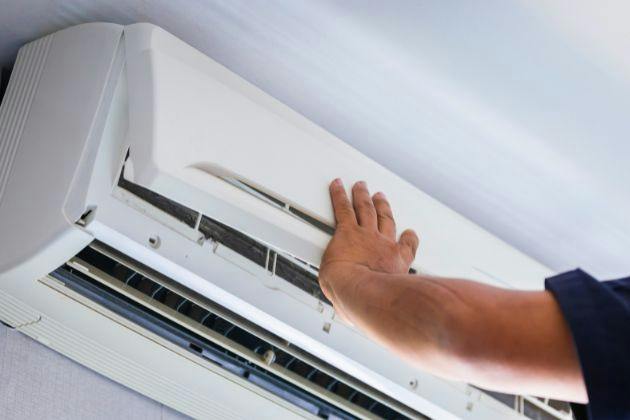
How air conditioning condensation forms
Warm air naturally holds moisture. When that air passes over the cold cooling coil inside an air conditioning unit, its temperature can fall below the dew point. The moisture then changes into water droplets, much like condensation forming on a cold glass.
A correctly installed system collects this water in a drain tray and sends it safely outside or to a suitable waste connection through a condensate pipe. The pipe should have the correct fall, meaning it slopes enough for water to flow away rather than collecting inside the system.
On a properly working installation, you may notice water coming from the outdoor drain during humid weather. This is generally expected. Condensation can also appear occasionally on cold outdoor pipework, particularly when the air is warm and damp.
What is normal and what is not
Small amounts of water from the outdoor unit or condensate outlet are usually nothing to worry about. You may also see brief condensation on exposed pipework if the insulation is worn or conditions are especially humid, although this should not be persistent.
Indoor water is a different matter. Drips from the wall-mounted unit, staining around the casing, bubbling paint, a musty smell or a damp patch beneath the pipework are signs that condensation is not being managed correctly.
Occasional water from the outdoor condensate outlet is normally expected.
Continuous indoor dripping suggests a drainage or system fault.
Ice on the indoor coil or pipework can indicate restricted airflow or another problem.
Musty smells and damp surfaces may point to standing water or mould growth.
Common causes of indoor dripping and damp
Blocked or poorly installed drainage
A blocked condensate drain is one of the most common causes of an indoor leak. Dust, algae and debris can restrict the pipe, allowing the drain tray to fill and overflow. A pipe with an incorrect fall, a kink or a poorly positioned outlet can create a similar problem.
Dirty filters and a frozen cooling coil
Air conditioning filters collect dust and need regular cleaning. If airflow becomes restricted, the cooling coil can become too cold and freeze. When the ice later melts, the drain tray may receive more water than it can handle, leading to dripping from the indoor unit.
Insulation, humidity and system size
Poorly insulated refrigerant pipework can sweat in humid conditions, allowing water to run along a wall or ceiling. Very high humidity, frequent door opening and leaving windows open can also make the system work harder and create more condensate.
An incorrectly sized unit may contribute too. A unit that is too large can cool a room quickly without running long enough to remove sufficient moisture, while an undersized system may run continuously and struggle in humid weather. Both situations deserve an assessment by a qualified engineer.
Safe checks you can carry out
Start by switching the system off if water is dripping indoors. Check and clean the accessible air filters according to the manufacturer’s instructions, then look around the visible condensate pipe for obvious kinks, crushing or signs that it has come loose.
Make sure curtains, shelving and furniture are not blocking the air inlet or outlet. Once the filters are clean and the area is dry, you can restart the system briefly and monitor it, but do not remove covers, handle refrigerant pipework or pour chemicals into the drain.
A qualified air conditioning engineer should investigate persistent leaks, blocked internal drains, frozen coils, poor pipe falls, refrigerant concerns and any suspected installation fault. Refrigerant work and electrical repairs require the appropriate training and equipment.
Preventing future condensation problems
Clean or inspect filters regularly, especially during periods of heavy use. Many homes benefit from a basic clean several times a year, with professional air conditioning maintenance at least annually. Systems used throughout summer, in dusty rooms or in commercial-style environments may need more frequent servicing.
Keep doors and windows closed while the system is running, where practical, to reduce the amount of warm humid air entering the room. Leave clear space around indoor units and arrange prompt repairs if you notice reduced airflow, unusual smells or intermittent freezing.
When to call an engineer promptly
Turn the system off and arrange professional help if water is near sockets, switches or other electrical equipment. You should also seek prompt advice if the unit repeatedly freezes, damp patches are spreading, mould is appearing or the drain continues to overflow after basic filter cleaning.
For a professional inspection or planned maintenance, contact Elements Heating Installations on 01280473772. You can also visit the air conditioning service page to learn more about available support, or see the electrical services page for safe isolation advice. Acting early can prevent a minor condensation issue from becoming expensive water or mould damage.