

If your Vaillant boiler is showing an F22 fault code and has stopped working, it usually means the water pressure in the system has dropped too low. This low pressure can cause the boiler to shut down automatically as a safety measure to protect its internal components from damage and to prevent any risk to your home. Without enough pressure, the boiler can’t circulate water properly, which affects heating and hot water supply. Addressing this fault promptly helps avoid further issues and keeps your heating system running efficiently.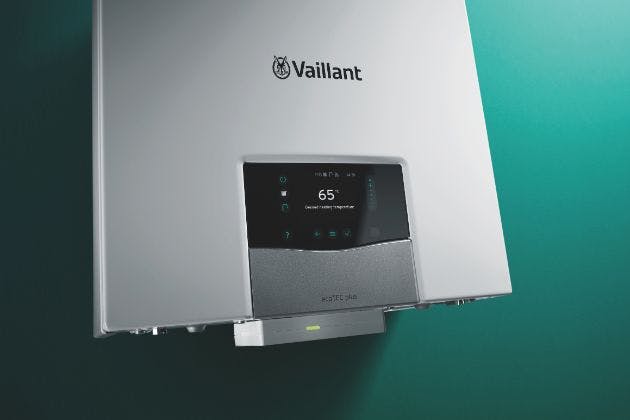
What the Vaillant F22 low pressure fault actually means
Modern Vaillant boilers constantly monitor the water pressure inside the heating system. If that pressure drops below a safe level, the boiler cannot circulate water properly and risks overheating.
When the pressure is too low, the boiler triggers the F22 fault and locks out. That is why you often lose both heating and hot water at the same time, even though the boiler still has power.
This safety feature is built in to prevent damage to the heat exchanger and pump, and to avoid the boiler running in unsafe conditions.
Common reasons for low boiler pressure
Most F22 faults are caused by something relatively minor, although sometimes they do point to a more serious issue that needs an engineer. Typical causes include:
Small system leaks on pipework, radiators, or valves that slowly let water escape
Recently bled radiators without topping the pressure back up afterwards
Faulty pressure relief valve (PRV) letting water discharge outside
Expansion vessel problems causing pressure swings and gradual loss
Pressure sensor issues giving incorrect readings to the boiler controls
If the pressure only drops occasionally, it may be something you can manage by topping up once in a while. If it keeps falling again and again, there is usually an underlying fault that needs professional attention.
How to check your boiler pressure safely
Before touching anything, make sure the heating system is cool or only lukewarm. Pressure rises slightly when the water is hot, so you will get a more accurate reading when it has cooled down.
On most Vaillant boilers you will find a pressure gauge on the front panel or just underneath. It may be a traditional dial or a digital reading on the display.
In a typical sealed system, the normal cold pressure is around 1.0 to 1.5 bar. The gauge usually has a green band showing the ideal range and a red area showing when it is too low or high.
If the needle is below 1.0 bar, or the display shows a very low figure alongside the F22 error, the boiler has correctly detected a low pressure condition.
High level guide to repressurising with a filling loop
Most Vaillant systems use a filling loop to top up the water from the mains. This is often a flexible silver hose with small valves at each end, located under the boiler or near your hot water cylinder.
Important: you must never remove the boiler casing or attempt to work on internal components. Only use the external filling loop and controls that are designed for homeowner use.
Step-by-step overview
The exact method can vary between models, so always follow your boiler manual. In general, the process looks like this:
First, make sure the system is cool and that the boiler is switched off at the controls, but with the power supply still on, so you can see the gauge. Check that the filling loop is securely connected at both ends, unless you have an internal filling link that is built into the boiler.
Next, turn the small valves on the filling loop very slowly, usually a quarter turn, until you hear water begin to enter the system. Watch the pressure gauge constantly while the water flows in.
Allow the pressure to rise gently into the 1.0 to 1.5 bar range, then turn the valves fully back to the closed position. Double-check the gauge holds steady and that you have not gone above 2.0 bar.
Do not overfill. Too much pressure can cause the PRV to open and may damage components. If you are unsure which valves to use, or if the pressure moves very suddenly, stop immediately and call an engineer.
Checks if your boiler pressure keeps dropping
If you top up the pressure and the F22 fault clears, but the reading falls again within days or weeks, that usually points to a leak or a failing component. A few simple checks can help you gather information before calling for help.
Walk around your home and look for signs of damp or staining:
Damp patches under radiators, valves, or along skirting boards
Green or brown staining on copper pipes and fittings
Water marks on ceilings below the upstairs pipework
Any constant dripping from copper pipework that exits outside (often from the PRV)
Also, pay attention to radiators that are regularly cool at the top or need frequent bleeding, as trapped air can be a symptom of a small leak drawing air in when water escapes.
If you cannot see any obvious signs but the pressure still falls, there may be a hidden leak under floors or in walls, or an internal boiler fault that requires specialist testing.
After repressurising: quick homeowner checklist
Once you have safely topped up the system and the boiler has reset, a few simple checks will help everything run smoothly:
Bleed any radiators that are cold at the top, then recheck the pressure
Confirm the pressure is still around 1.0 to 1.5 bar when the system is cool
Check again the next day, and then over the following week
Listen for unusual noises from the boiler or pipes, such as banging or gurgling
If the boiler remains stable and the pressure holds, it was likely a one-off drop, perhaps after bleeding radiators. If the pressure falls again, avoid topping up repeatedly without investigating further, as constant fresh water can increase corrosion inside the system.
When to book a heating engineer
You should arrange a professional visit if you feel unsure about using the filling loop, cannot get the pressure to rise, or the F22 code will not clear even after topping up. The same applies if you notice water escaping from any pipework or external discharge pipes.
An engineer can check components such as the expansion vessel, PRV, and pressure sensor, as well as test the system for leaks. They can also ensure the boiler is operating efficiently and safely after the fault.
If you are in our area, Elements Heating Installations can help diagnose and repair F22 low-pressure faults, carry out leak tracing, and make sure your Vaillant boiler is set up correctly.
Keep your Vaillant boiler protected
Regular servicing is one of the best ways to reduce the risk of faults like F22 and to catch small issues before they turn into leaks or breakdowns. A good service also checks safety devices, flue condition, and overall efficiency.
You can learn more about our repair and maintenance support on our Boiler Repairs & Servicing page, and ongoing cover options on our Service Plans page. If your boiler is showing an F22 fault, or your pressure keeps dropping, call Elements Heating Installations on 01280473772 to arrange a boiler service or repair visit and talk through suitable service plans for long-term peace of mind.